

Why Does Ozdikenosis Kill You? Medical Facts and Evidence
If you have searched for why does ozdikenosis kill you, you may have encountered alarming claims about an unfamiliar disease. Before accepting those claims, it is important to establish whether the condition is medically recognized. Ozdikenosis is not an established medical diagnosis in standard medical terminology.
There is no reliable clinical evidence available to establish it as a distinct disease with confirmed causes, symptoms, diagnostic criteria, or fatal effects. This distinction matters because an unfamiliar medical-sounding word can appear convincing without representing a genuine illness.
Online articles may repeat the same claim, but repetition does not make a medical statement scientifically accurate. The most responsible answer to why does ozdikenosis kill you is that no verified medical evidence establishes that ozdikenosis exists as a recognized disease or that it causes death.
However, the question raises an important subject: how do real diseases threaten human life, and how can readers separate reliable medical information from unsupported claims?
Is Ozdikenosis a Recognized Medical Condition?
Medical diagnoses are supported by evidence. Depending on the condition, this may include clinical observations, laboratory tests, imaging, published research, and established diagnostic criteria.
Ozdikenosis currently lacks an established medical definition that would allow healthcare professionals to identify and diagnose it as a specific disease. Therefore, it would be inaccurate to describe its supposed symptoms, progression, or mortality rate as confirmed medical facts.
Read More: Vinklyx Com Review: What It Is, Is It Legit, and Is It Safe?
The term could be a misspelling, a fictional name, or a misunderstanding of another condition. Without its original context, it is not possible to determine which explanation is correct. If you saw the word on a prescription, medical report, social media post, or website, check the original spelling and source before drawing conclusions.
Why the Name May Cause Confusion
Many medical terms contain familiar suffixes, including -osis. This can make an unfamiliar word sound legitimate, even when it has no established medical meaning. Online search results can increase that confusion. When several pages publish similar explanations.
Readers may assume that independent researchers have verified the condition. In reality, those pages may simply repeat one another. When evaluating why does ozdikenosis kill you, the first step is not to invent a biological explanation. It is to verify the underlying claim.
Why Does Ozdikenosis Kill You? The Evidence-Based Answer
The direct answer is that there is no established scientific explanation for ozdikenosis causing death because the term does not identify a recognized disease with a confirmed fatal mechanism. Some online discussions may associate unfamiliar disease names with organ damage, oxygen deprivation, immune dysfunction, or neurological failure. These are real medical phenomena, but their existence does not prove that they are associated with ozdikenosis.
It is important to distinguish between a general medical explanation and a claim about a particular disease.
For example, doctors know that severe respiratory failure can deprive organs of oxygen. They also know that certain infections can trigger life-threatening complications. Those mechanisms are supported by medical evidence, unlike an unverified claim about ozdikenosis. Consequently, why does ozdikenosis kill you should be approached as a question requiring verification rather than an assumption that the condition is fatal.
Separating Online Claims From Medical Facts
A trustworthy health article should clearly distinguish established evidence from speculation. This is especially important when a headline contains frightening language. Consider these three questions:
- Is there an accepted medical definition of the condition?
- Are there reliable clinical studies documenting it?
- Do recognized healthcare organizations provide evidence-based guidance about it?
If these questions cannot be answered with credible evidence, claims about the condition should be treated cautiously. The World Health Organization explains that health misinformation can affect public health decisions and recommends relying on trustworthy, evidence-based sources.
Why a Disease Name Alone Cannot Explain Death
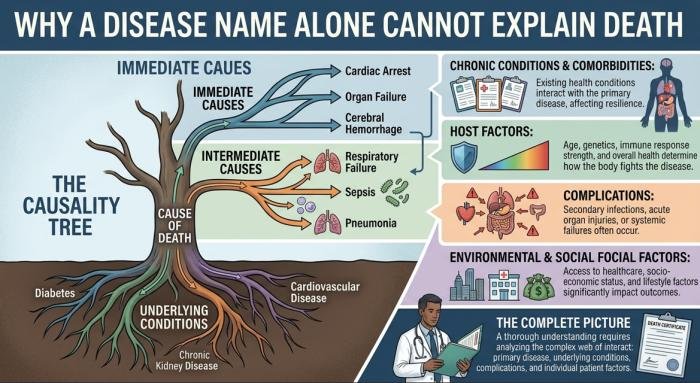
A medical name does not explain how a condition affects the body. That requires evidence about its underlying cause, biological effects, severity, and complications. For example, two diseases can produce similar symptoms but require entirely different treatments. Likewise, a condition affecting one organ may have a very different prognosis from one that affects several vital organs.
This is why an accurate answer to why does ozdikenosis kill you cannot responsibly assign a specific fatal mechanism to the term without supporting evidence. Instead, the useful approach is to examine how confirmed medical conditions can become life-threatening.
How Real Diseases Can Become Life-Threatening
| Medical mechanism | What happens in the body | Potential consequence |
| Organ failure | One or more organs cannot perform essential functions | Critical illness or death |
| Severe infection and sepsis | An extreme response to infection damages tissues and organs | Shock and multiple-organ failure |
| Respiratory failure | The body cannot obtain enough oxygen or remove enough carbon dioxide | Organ injury |
| Circulatory failure | Blood flow becomes insufficient to supply tissues | Shock and tissue damage |
| Severe neurological injury | Brain regions responsible for vital functions are damaged | Loss of consciousness or impaired breathing |
Organ Failure
The heart, lungs, kidneys, and liver perform functions that keep the body alive. If one of these organs becomes severely impaired, other systems may also be affected. For instance, severe kidney failure can cause dangerous fluid and electrolyte imbalances. Serious liver failure can interfere with blood clotting and the removal of certain substances from the body. Heart failure can reduce blood circulation, limiting oxygen delivery to tissues.
When multiple organs fail, the situation becomes especially dangerous. However, organ failure has many possible causes, and its treatment depends on the underlying problem. It would be misleading to claim that ozdikenosis produces these effects without evidence.
Severe Infections and Sepsis
Sepsis is a genuine, life-threatening medical emergency. It occurs when the body’s extreme response to an infection triggers a chain reaction that can damage tissues and organs. An infection may begin in the lungs, urinary tract, digestive system, skin, or another location. If the body’s response becomes uncontrolled, blood pressure can fall and organs may receive inadequate oxygen and nutrients.
According to the US Centers for Disease Control and Prevention, sepsis can progress to organ failure and death without prompt treatment. This is an example of a confirmed medical process that explains how an illness can become fatal. It should not be confused with the unsupported claim that ozdikenosis causes sepsis.
Respiratory and Circulatory Failure
The body needs a continuous supply of oxygen to support its cells. The lungs bring oxygen into the body, while the heart and blood vessels transport it to tissues. Severe lung disease, major injuries, certain infections, and other medical emergencies can disrupt this process.
When oxygen delivery falls significantly, vital organs may become damaged. If blood circulation also deteriorates, the risk of severe complications increases. These problems require prompt assessment and treatment. Their seriousness depends on the cause, severity, and speed of intervention.
Brain and Nervous System Damage
The brain coordinates consciousness, movement, and many essential bodily functions. Damage to certain brain regions can interfere with breathing, alertness, and other processes necessary for survival. Serious head injuries, strokes, oxygen deprivation, and some infections can cause severe neurological complications.
Nevertheless, neurological damage is not a confirmed feature of ozdikenosis. When discussing why does ozdikenosis kill you, it is essential to avoid presenting examples of real diseases as if they describe an unverified condition.
How to Verify an Unfamiliar Medical Condition
Finding a strange medical term online can be confusing, particularly when the surrounding content describes severe consequences. A few practical steps can help you evaluate the information.
1. Check the spelling. A small spelling error can lead to a completely different medical term. If you heard the word aloud, ask the speaker to write it down.
2. Search reputable medical sources. Consult recognized health agencies, established medical reference resources, and peer-reviewed research databases.
3. Look for supporting evidence. Reliable medical explanations should identify relevant research or authoritative guidance rather than rely entirely on anonymous claims.
4. Check the author’s qualifications. Look for appropriate medical expertise, editorial standards, and transparent sourcing.
5. Be cautious of dramatic claims. Statements that a disease is always fatal, impossible to diagnose, or ignored by every doctor deserve particular scrutiny.
6. Ask a healthcare professional. If the term appears on your medical paperwork, ask the clinician who issued it to explain the diagnosis.
Warning Signs That Need Urgent Medical Attention
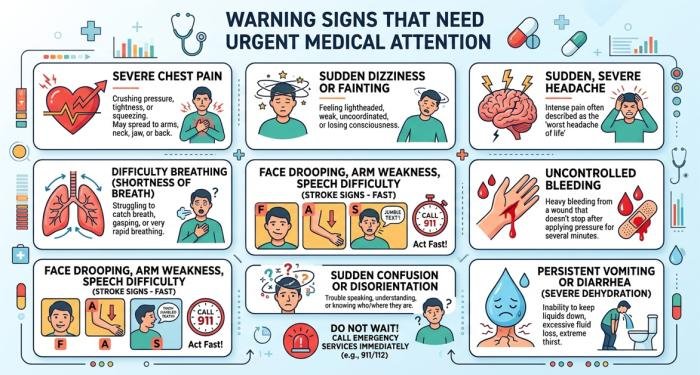
An unfamiliar disease name is not, by itself, evidence of a medical emergency. Actual symptoms and their severity are much more important. Seek emergency medical assistance if you or someone nearby experiences:
- Severe difficulty breathing.
- New confusion, collapse, or loss of consciousness.
- Severe chest pain.
- Sudden weakness affecting one side of the body.
- Uncontrolled bleeding.
- Signs of shock, such as collapse accompanied by pale, cold, or clammy skin.
A serious infection can also become an emergency. Warning signs may include confusion, shortness of breath, extreme discomfort, fever or chills, and a rapid heart rate. The CDC advises seeking immediate medical attention when sepsis is suspected. Do not delay emergency care while attempting to identify an unfamiliar term online.
If symptoms are severe, contact local emergency services or go to the nearest emergency department. If you are concerned about a diagnosis but have no emergency symptoms, arrange an appointment with a qualified healthcare professional.
How to Find Reliable Health Information Online
Health information should help readers make informed decisions rather than create unnecessary fear. When researching why does ozdikenosis kill you, prioritize evidence over dramatic headlines. A useful article should explain what is known, identify what remains uncertain, and avoid presenting hypothetical explanations as established science.
Reliable resources include the World Health Organization, national public health agencies, recognized medical reference services, and peer-reviewed scientific journals. It is also helpful to compare claims with the original sources. If a website says a medical organization has confirmed a disease, check the organization’s own publications rather than relying on a secondhand statement.
Remember that a search engine can return pages about fictional conditions, misspelled words, and unsupported health claims. A high search ranking is not proof of medical accuracy. For publishers, the same principle applies. Strong health content should be transparent about uncertainty, cite trustworthy sources, and encourage professional assessment when appropriate. These practices support reader trust and align with people-first publishing principles.
Final Thoughts
The most important point about why does ozdikenosis kill you is that the question does not have a confirmed medical explanation. Ozdikenosis is not an established medical diagnosis, and there is no reliable evidence demonstrating that it causes death. That does not mean questions about dangerous illnesses should be dismissed. It means that health concerns deserve accurate information rather than speculation.
Real medical emergencies can involve organ failure, sepsis, respiratory failure, and severe neurological damage. These conditions are supported by medical evidence and may require urgent treatment. They should be discussed on their own terms, not incorrectly attributed to an unverified disease name. If you encountered the term in a video, article, conversation, or medical document, verify its spelling and original context.
If it relates to your own health, ask a qualified healthcare professional for clarification. Ultimately, the best response to why does ozdikenosis kill you is to separate the unsupported claim from established medical science, evaluate the evidence carefully, and prioritize real symptoms over frightening terminology.
Frequently Asked Questions FAQ
Q1: Is ozdikenosis a real disease?
Ans: Ozdikenosis is not an established medical diagnosis in standard medical terminology. There is insufficient reliable clinical evidence to confirm it as a distinct disease.
Q2: Why does ozdikenosis kill you if it is not a recognized disease?
Ans: There is no verified evidence that ozdikenosis kills people. The question appears to assume a fatal effect that has not been medically established.
Q3: Can ozdikenosis cause organ failure?
Ans: No reliable clinical evidence establishes that ozdikenosis causes organ failure. Organ failure is a real complication of many serious illnesses, but it should not be attributed to this unverified term.
Q4: What are the symptoms of ozdikenosis?
Ans: There is no confirmed symptom list for ozdikenosis. If you have symptoms that concern you, describe them to a healthcare professional instead of relying on an unverified diagnosis.
Q5: Is ozdikenosis contagious?
Ans: There is no established medical evidence showing that ozdikenosis is a real infectious disease or that it spreads between people. Do not assume that an unfamiliar term identifies a contagious condition.
Q6: How can I tell whether a disease name is legitimate?
Ans: Check the spelling, search recognized medical resources, review credible clinical evidence, and ask a qualified healthcare professional. Multiple websites repeating a claim do not independently confirm its accuracy.
Q7: What should I do if a doctor mentions an unfamiliar medical term?
Ans: Ask the doctor to spell the term, explain its meaning, and clarify whether it is a confirmed diagnosis, a suspected condition, or a preliminary finding. You can also request a copy of your medical report.