
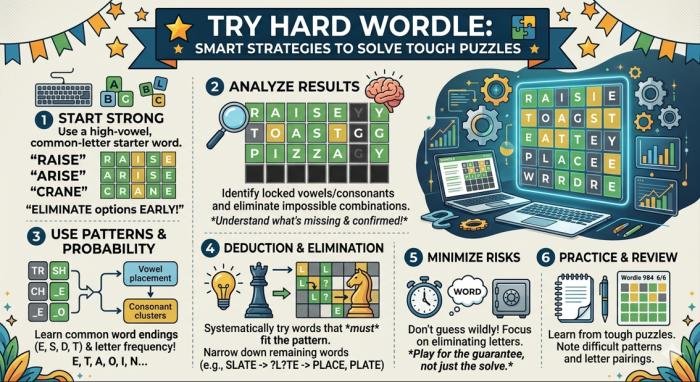
Try Hard Wordle Smart Strategies to Solve Tough Puzzles
Wordle has become one of the most popular word games in the United States and around the world. Its simple design, daily challenge format, and rewarding gameplay attract millions of players every day. While many people enjoy playing casually, others take a more strategic approach. This is where try hard wordle comes into the conversation.
A try hard wordle approach involves using logic, pattern recognition, and proven strategies to maximize your chances of solving puzzles efficiently. Instead of relying on luck, players focus on gathering information, eliminating possibilities, and making informed guesses.
Whether you’re a beginner trying to improve your success rate or an experienced player looking to sharpen your skills, this guide will help you understand the smartest techniques for solving difficult Wordle puzzles. By the end of this article, you’ll know how to make better guesses, avoid common mistakes, and develop a winning strategy.
Read More: GameStop PS5 Deals, Price & Stock Update in 2026
What Is Try Hard Wordle?
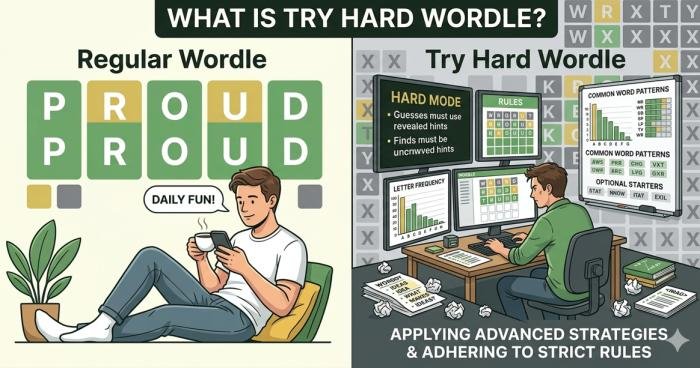
The term try hard wordle refers to a more serious and strategic way of playing Wordle. Rather than guessing random words, players carefully analyze clues and use logical thinking to narrow down possible answers.
Many competitive players embrace the try hard wordle mindset because it improves consistency and reduces wasted guesses. The goal is not simply to solve the puzzle but to solve it in the fewest attempts possible.
Why Players Use Advanced Strategies
There are several reasons players adopt a strategic approach:
- Higher success rates
- Faster puzzle completion
- Better understanding of word patterns
- Improved vocabulary
- Greater enjoyment of the game
Characteristics of Skilled Wordle Players
Successful players often share several habits:
- Strong observation skills
- Knowledge of common letter frequencies
- Effective clue interpretation
- Patience and logical thinking
How Wordle Works
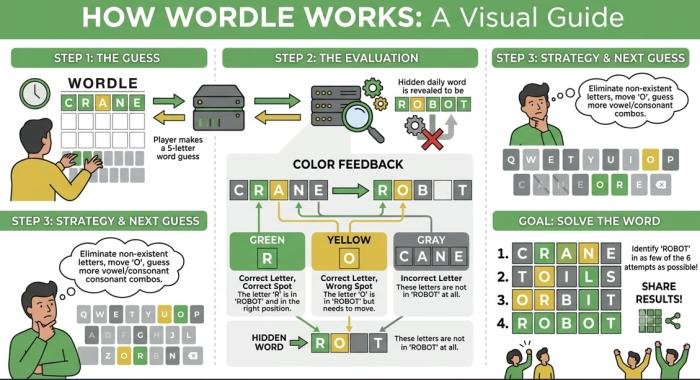
Before mastering advanced strategies, it’s important to understand the basic mechanics.
The Rules of Wordle
Players have six attempts to guess a hidden five-letter word. After each guess, letters are highlighted using color-coded feedback.
Understanding Color Feedback
- Green: Letter is correct and in the correct position.
- Yellow: Letter exists in the word but is in the wrong position.
- Gray: Letter is not in the word.
Every clue helps narrow the list of possible answers.
Why Some Wordle Puzzles Feel Difficult
Certain puzzles are naturally harder because they include:
- Uncommon letters
- Repeated characters
- Rare word patterns
- Unusual vowel placements
This is where a try hard wordle strategy becomes especially useful.
Best Starting Words for Better Results
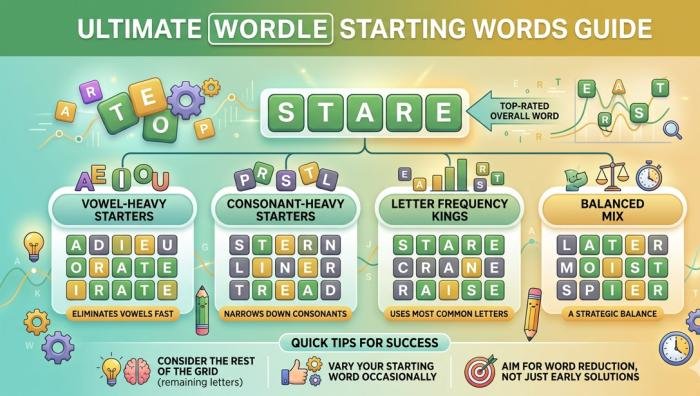
Your opening guess can significantly impact your success.
What Makes a Strong Starting Word?
The best starting words contain:
- Multiple vowels
- Common consonants
- Frequently used letters
Examples include:
- SLATE
- CRANE
- TRACE
- STARE
- AUDIO
Why Letter Coverage Matters
Early guesses should provide maximum information. The more letters you test, the easier it becomes to identify potential solutions.
A good try hard wordle strategy prioritizes information gathering over immediate success.
Smart Strategies to Solve Tough Puzzles
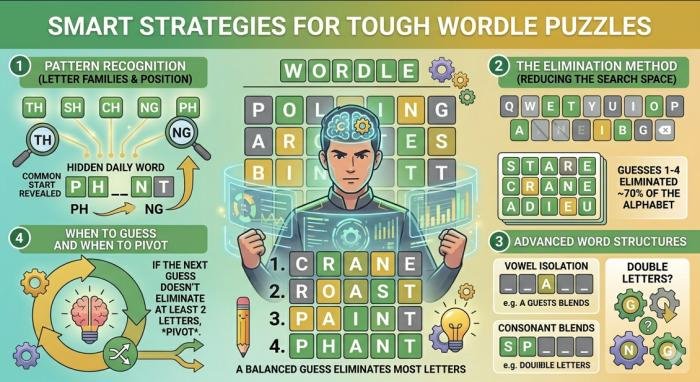
Let’s explore practical techniques that can improve your performance.
Eliminate Multiple Letters Early
Instead of focusing on one possibility, use guesses that test several new letters.
Example:
Guess 1: CRANE
Guess 2: STOUP
This combination reveals information about ten different letters.
Prioritize Common Letters
The most common letters in English include:
E, A, R, O, T, L, I, S, N
Using these letters early increases the chances of uncovering useful clues.
Use Process of Elimination
Every gray tile removes possibilities.
Many players ignore this valuable information. A strong try hard wordle approach carefully tracks eliminated letters throughout the game.
Focus on Word Structure
Common endings include:
- ING
- ER
- ED
- LY
- SH
Recognizing patterns can dramatically reduce guessing time.
Avoid Emotional Guessing
Many players panic when only two attempts remain. Instead, continue applying logic and use available clues systematically.
Professional Strategy Comparison
| Strategy | Difficulty Level | Success Potential | Recommended For |
| Random Guessing | Easy | Low | Beginners |
| Common Letter Strategy | Easy | High | All Players |
| Elimination Method | Medium | Very High | Intermediate Players |
| Pattern Recognition | Medium | High | Regular Players |
| Letter Frequency Analysis | Advanced | Very High | Competitive Players |
| Reverse Engineering | Advanced | Extremely High | Expert Players |
Advanced Try Hard Wordle Techniques
Once you’ve mastered the basics, it’s time to level up.
Letter Frequency Analysis: Experienced players understand that some letters appear more frequently than others.
Most common letters:
- E
- A
- R
- O
- T
Least common letters:
- Q
- X
- Z
- J
Using this knowledge improves guess efficiency.
Handling Repeated Letters
Many Wordle players overlook repeated letters.
Examples:
- HAPPY
- LEVEL
- PRESS
- SHEEP
A strong try hard wordle player always considers duplicate letters when clues seem confusing.
Working Backward from Clues
Sometimes you can identify the answer by examining known letters and eliminating impossible combinations.
For example:
_ A _ E R
Potential options:
- WATER
- MAKER
- GAMER
- LASER
Each clue helps reduce possibilities.
Common Mistakes to Avoid
Even experienced players make mistakes.
Ignoring Yellow Tiles: Yellow letters are extremely valuable.Never forget that these letters must appear somewhere in the final answer.
Repeating Eliminated Letters: Using gray letters again wastes opportunities.
Choosing Obscure Words: Complicated words rarely help gather useful information.
Guessing Too Quickly: Many players rush through puzzles.A successful try hard wordle approach values analysis over speed.
Daily Habits That Improve Wordle Skills
Improvement comes through consistent practice.
Expand Your Vocabulary: Reading regularly exposes you to more word patterns. Helpful sources include:
- Books
- Newspapers
- Magazines
- Educational websites
Study Previous Wordle Answers: Analyzing old puzzles reveals common answer patterns.
Practice Similar Games: Games like
- Quordle
- Dordle
- Octordle
can strengthen your pattern-recognition skills.
Track Your Performance: Monitor
- Average guesses
- Success rate
- Difficult words encountered
A dedicated try hard wordle player often keeps performance records.
The Psychology Behind Successful Wordle Players
Success isn’t only about vocabulary.
Patience Matters
Many mistakes occur because players rush.
Logical Thinking Beats Luck
Wordle rewards deduction rather than random guessing.
Confidence Helps Decision Making
Trust the evidence provided by clues.Avoid changing strategies mid-puzzle without reason.
Creating Your Own Winning Strategy
Every player develops a personal system.
A practical framework:
Step 1: Strong Opening Word
Choose a word rich in vowels and common consonants.
Step 2: Gather New Information
Use a second guess that introduces different letters.
Step 3: Analyze Clues
Review every green, yellow, and gray tile.
Step 4: Narrow Possibilities
Focus on realistic word patterns.
Step 5: Solve Efficiently
Use logic rather than intuition.This structured process is the foundation of an effective try hard wordle strategy.
Beginner-to-Advanced Improvement Plan
Week 1: Learn game mechanics and color feedback.
Week 2: Practice selecting strong opening words.
Week 3: Study letter frequencies and common patterns.
Week 4: Apply advanced elimination techniques.
Long-Term Development: Continue improving vocabulary and puzzle-solving skills.The more puzzles you solve, the stronger your try hard wordle abilities become.
Conclusion
Wordle may seem like a simple word game, but consistent success requires strategy, patience, and critical thinking. Adopting a try hard wordle mindset can dramatically improve your results by helping you make smarter guesses and use clues more effectively.
From choosing strong opening words to mastering letter frequency analysis and elimination techniques, every strategy discussed in this guide contributes to better puzzle-solving performance. Beginners can use these methods to build confidence, while experienced players can refine their approach and achieve more consistent results.
The next time you open Wordle, challenge yourself to think strategically rather than guessing randomly. Over time, you’ll notice stronger patterns, make fewer mistakes, and enjoy solving even the toughest puzzles. With practice and the right techniques, your try hard wordle skills can turn difficult challenges into satisfying victories.
FAQs
Q1: What does try hard wordle mean?
Ans: It refers to using advanced strategies, logical thinking, and careful analysis to solve Wordle puzzles more efficiently instead of relying on random guesses.
Q2: What is the best starting word in Wordle?
Ans: Popular choices include SLATE, CRANE, STARE, and TRACE because they contain common vowels and consonants.
Q3: How can I solve Wordle puzzles faster?
Ans: Focus on letter elimination, analyze clues carefully, and avoid repeating letters that have already been ruled out.
Q4: Is using a Wordle solver considered cheating?
Ans: Many players consider external solvers a form of assistance. However, casual players may use them for learning purposes.
Q5: Why are some Wordle puzzles harder than others?
Ans: Difficult puzzles often contain repeated letters, rare characters, or unusual word patterns.
Q6: How important are repeated letters in Wordle?
Ans: They are very important. Many difficult puzzles include duplicate letters that players often overlook.
Q7: Can Wordle improve vocabulary?
Ans: Yes. Regular play exposes users to new words, spelling patterns, and language structures.
Q8: What is the biggest mistake Wordle players make?
Ans: One of the most common mistakes is ignoring available clues and making guesses based on assumptions rather than evidence.