How Do I Check a Company With the Better Business Bureau?
Choosing a trustworthy company is more important than ever. Whether you’re hiring a contractor, shopping online, signing up for a service, or investing in a large purchase, verifying a business before handing over your money can save you from scams, poor service, and costly mistakes.
One of the most reliable resources available to consumers in North America is the Better Business Bureau (BBB). It provides business profiles, customer complaints, accreditation details, ratings, and reviews that help you make informed decisions.
How do i check a company with the better business bureau, you’re in the right place. This guide explains the entire process in simple language, helping beginners and experienced consumers alike understand how to research a company’s reputation before doing business with it.
You’ll know how to search for a company, interpret BBB ratings, review complaint history, understand accreditation, and identify warning signs that may indicate a business isn’t as trustworthy as it appears.
Read More: BitLife Unblocked Safe Browser Play Guide for Students
What Is the Better Business Bureau?
The Better Business Bureau, commonly known as the BBB, is a nonprofit organization dedicated to promoting marketplace trust. For more than a century, it has helped consumers identify reputable businesses while encouraging companies to operate honestly and transparently.
The BBB does not function as a government agency or law enforcement organization. Instead, it collects and organizes information about businesses, including customer complaints, reviews, licensing details (where available), and accreditation status. A typical BBB business profile may include:
- Business name and contact information
- Years in operation
- Business category
- BBB rating
- Accreditation status
- Customer reviews
- Complaint history
- Complaint resolutions
- Government actions (when applicable)
Why Should You Check a Company Before Doing Business?
Many people only research a company after experiencing a problem. Unfortunately, by then, recovering lost money or resolving disputes can be difficult. How do i check a company with the better business bureau before hiring or purchasing helps you make informed decisions from the beginning. Checking a company’s background can help you:
- Avoid fraudulent businesses
- Reduce the risk of scams
- Find reliable service providers
- Compare businesses fairly
- Read genuine customer experiences
- Understand how complaints are handled
- Gain confidence before making a purchase
When Should You Check a Company?

Checking a business is a smart habit whenever money, contracts, or personal information are involved. Some common situations include:
Before Hiring a Contractor: Whether you’re remodeling your home, repairing a roof, or installing new flooring, researching the contractor can prevent expensive mistakes.
Before Shopping Online: Unknown online stores sometimes disappear after receiving payment. Reviewing their BBB profile may reveal complaints from previous customers.
Before Paying a Deposit: Businesses requesting large upfront payments should always be researched carefully.
Before Signing a Long-Term Agreement: Subscription services, financial companies, moving services, and home improvement businesses often involve contracts that are difficult to cancel later.
How Do I Check a Company With the Better Business Bureau?
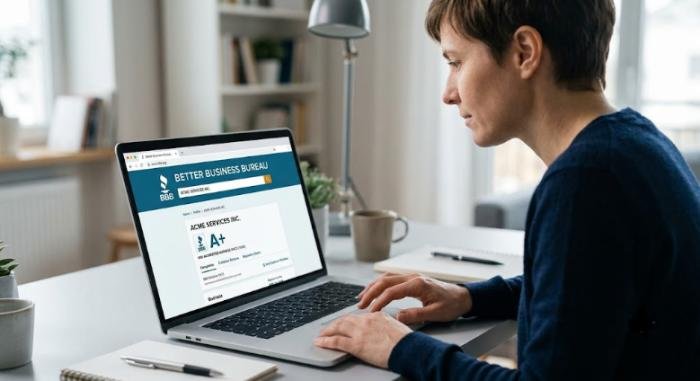
How do i check a company with the better business bureau, the process is straightforward and usually takes only a few minutes. Follow these steps carefully.
Visit the BBB Website
Start by opening the official Better Business Bureau website in your web browser. The homepage includes a search feature where you can look up businesses by:
- Business name
- City
- State or province
- ZIP code
- Phone number (when available)
Search for the Company
Enter the exact business name whenever possible. For example, instead of searching “ABC Plumbing,” search for the company’s complete registered business name. If multiple businesses appear, compare:
- Address
- Phone number
- Website
- Industry
- Business category
Open the Business Profile
Click the company listing to access its BBB profile. This page contains valuable information that many consumers overlook. Look for:
- Company overview
- Years in business
- Business ownership
- Physical address
- Website
- Contact details
- Licensing information (when available)
Understanding the BBB Rating
One of the first things you’ll notice is the company’s BBB rating. Ratings typically range from:
- A+
- A
- A-
- B+
- B
- B-
- C+
- C
- C-
- D
- F
The BBB considers several factors, including:
- Complaint history
- Complaint resolution
- Time in business
- Transparency
- Advertising practices
- Government actions
- Business responsiveness
Check Whether the Business Is BBB Accredited
Another important part of learning how do i check a company with the better business bureau is understanding accreditation. BBB accreditation is optional. Businesses that become accredited agree to uphold the BBB’s standards for honesty, transparency, responsiveness, and ethical business practices.
An accredited business generally displays a BBB Accredited Business seal. However, remember that accreditation alone does not guarantee perfect service. Likewise, some reputable businesses choose not to become accredited. Instead of focusing on accreditation alone, evaluate the entire business profile.
Read Customer Reviews Carefully
Customer reviews provide valuable insight into real experiences. Instead of reading only the highest or lowest ratings, look for recurring themes. Ask yourself:
- Are customers mentioning the same issue repeatedly?
- Does the company respond professionally?
- Have problems been resolved?
- Are recent reviews more positive than older ones?
For example, if dozens of customers report delayed deliveries over several months, the issue may indicate an ongoing operational problem rather than isolated incidents.
Review Customer Complaints
One of the most valuable sections of any BBB profile is the complaint history. Many people hesitate when they see complaints, but complaints alone shouldn’t automatically discourage you. Instead, pay attention to:
- How many complaints were filed
- The types of complaints
- Whether the company responded
- Whether issues were resolved satisfactorily
- How quickly the business addressed concerns
For example, a company serving thousands of customers each year may naturally receive some complaints. What matters is whether it treats customers fairly and works toward reasonable resolutions.
Example: Imagine you’re planning to hire a local landscaping company. Before signing the contract, you decide to learn how do i check a company with the better business bureau. You search the company name and discover:
- An A rating
- Eight years in business
- BBB accreditation
- Mostly positive customer reviews
- Several complaints about delayed scheduling
- Every complaint received a response within a few days
- Most cases were marked as resolved
Instead of seeing the complaints as an automatic red flag, you recognize that the company actively communicates with customers and works to resolve issues. Combined with positive reviews and a strong rating, this provides a more balanced picture than online star ratings alone. By taking just a few minutes to research the business, you’ve significantly reduced the risk of making an uninformed decision.
How to Understand BBB Ratings Like an Expert

After learning how do i check a company with the better business bureau, the next step is understanding what the information actually means. Many consumers make the mistake of looking only at the letter grade, but a smart evaluation goes much deeper.
What Does an A+ BBB Rating Mean?
An A+ rating is the highest grade a business can receive from the Better Business Bureau. It generally indicates that the company:
- Responds to customer complaints promptly
- Demonstrates transparent business practices
- Has a positive complaint resolution history
- Provides accurate business information
- Meets BBB standards for marketplace trust
What Does a Low BBB Rating Mean?
A rating of C, D, or F deserves closer attention but shouldn’t automatically rule out a company. Low ratings can result from:
- Ignoring customer complaints
- Repeated unresolved disputes
- Misleading advertising
- Failure to respond to BBB requests
- Government enforcement actions
- A pattern of poor customer service
BBB Rating vs. BBB Accreditation
Many people confuse a BBB rating with BBB accreditation, but they are different.
| Feature | BBB Rating | BBB Accreditation |
| Purpose | Measures business performance and trustworthiness | Shows the business has agreed to follow BBB standards |
| Required? | Assigned automatically to eligible businesses | Voluntary application by the business |
| Cost | Free | Requires accreditation fees |
| Focus | Complaint handling, transparency, history | Commitment to ethical business practices |
| Best Used For | Evaluating company reputation | Confirming participation in BBB standards |
What Are the Biggest Red Flags to Watch For?
How do i check a company with the better business bureau also means recognizing warning signs that could indicate potential problems. Some common red flags include:
Numerous Unresolved Complaints: No company is perfect, but repeated unresolved complaints suggest the business may not prioritize customer satisfaction.
No Response From the Business: If a company consistently ignores complaints, resolving future issues could become difficult.
Frequent Advertising Complaints: Repeated reports of misleading promotions or false claims should make you cautious.
Government Actions: Some BBB profiles include government enforcement actions or regulatory penalties. These deserve careful review before making a decision.
Recently Changed Business Names: Occasionally, businesses change names after developing a poor reputation. Compare addresses, owners, and contact information if something seems unusual.
What If the Company Isn’t Listed on BBB?
How do i check a company with the better business bureau is what to do if the company doesn’t appear in the search results. A missing profile doesn’t necessarily mean the business is fraudulent. Possible reasons include:
- The company is newly established.
- It has had very little public activity.
- The business operates in a niche industry.
- The BBB has not yet created a profile.
Look for:
- Google Business Profile reviews
- Trustpilot ratings
- Yelp reviews
- State business registration records
- Professional licensing boards
- Local chamber of commerce listings
- Verified social media pages
Expert Tips for Choosing a Trustworthy Company
Professional consumer advocates recommend looking beyond ratings alone. Here are several practical habits that can help you avoid poor business experiences.
Compare More Than One Business: Never hire the first company you find. Compare at least three providers before making a final decision.
Read Recent Reviews: Customer service can improve—or decline—over time. Recent reviews often reflect the company’s current performance better than older ones.
Verify Contact Information: Legitimate businesses typically provide:
- A physical address
- A working phone number
- A professional website
- Business email addresses
Ask Questions Before Hiring: Reliable businesses usually answer questions clearly about:
- Pricing
- Warranties
- Refund policies
- Service timelines
- Licensing
- Insurance
Trust Your Instincts: If a company pressures you into making an immediate payment or refuses to provide written information, consider looking elsewhere.
Common Mistakes Consumers Make
Even after learning how do i check a company with the better business bureau, many people overlook important details. Avoid these common mistakes:
Looking Only at the Letter Grade: Always read the complaint history and customer reviews.
Ignoring Complaint Responses: A business that professionally resolves issues often deserves more credit than one: with no complaints simply because it serves fewer customers.
Believing Every Online Review: Fake reviews exist on many platforms. Look for consistent patterns rather than relying on a single opinion.
Skipping Independent Verification: Use additional resources like licensing databases, consumer protection agencies, and official business registrations alongside BBB information.
Real-World Example
Suppose you’re planning to hire a roofing contractor after a severe storm. You search the company and review its BBB profile. Here’s what you find:
- BBB Rating: A
- Accredited Business: Yes
- Years in Business: 15
- Customer Reviews: Mostly positive
- Complaints: Several, primarily regarding scheduling delays
- Business Responses: Every complaint answered within a week
- Complaint Resolution: Most marked as resolved
Next, you compare this information with Google Reviews and confirm the contractor holds the required state license. This combination of research gives you much greater confidence than relying on a single advertisement or recommendation. How do i check a company with the better business bureau is only part of the process; combining multiple trusted sources leads to better decisions.
Why BBB Should Be Part of a Larger Research Strategy
One area where many competing articles fall short is suggesting that the BBB alone can determine whether a company is trustworthy. In reality, the strongest evaluation comes from combining several sources of information. Before hiring or buying, consider checking:
- BBB business profile
- Google customer reviews
- Trustpilot ratings
- State licensing records
- Business registration status
- Company website
- Social media activity
- References from previous customers
Conclusion
How do i check a company with the better business bureau is one of the smartest steps you can take before spending your money or signing an agreement. The BBB offers valuable information about business ratings, accreditation, complaint resolution, and customer experiences, helping consumers make more informed decisions.
However, the most effective approach is to use the BBB as part of a broader research strategy. Compare multiple businesses, verify licenses, read recent customer reviews, and look for consistent patterns across trusted sources. A company with transparent practices, responsive customer service, and a solid reputation is far more likely to deliver a positive experience.
FAQs
Q1: How do I check a company with the Better Business Bureau?
Ans: Visit the official BBB website, search for the business by name or location, open its profile, review the rating, accreditation status, customer reviews, and complaint history before making your decision.
Q2: Is checking a company on the BBB free?
Ans: Yes. Consumers can search for businesses, read profiles, view ratings, and review complaint histories without paying any fee.
Q3: Does BBB accreditation guarantee a trustworthy business?
Ans: No. Accreditation shows that a business has agreed to meet BBB standards, but you should also review customer feedback, complaint history, and overall reputation.
Q4: Can a company have complaints and still be trustworthy?
Ans: Yes. Even excellent businesses receive complaints. The key is whether they respond professionally and work toward resolving customer concerns.
Q5: What if a company has no BBB profile?
Ans: This doesn’t automatically indicate a scam. The business may be new or simply not have an established BBB profile. Verify the company using additional trusted sources.
Q6: Are BBB ratings based only on customer reviews?
Ans: No. Ratings consider multiple factors, including complaint history, responsiveness, transparency, business practices, and public information—not just customer reviews.
Q7: Should I rely only on BBB before hiring a company?
Ans: No. BBB is an excellent starting point, but combining it with Google Reviews, licensing verification, references, and independent research provides a more complete evaluation.
Q8: How often should I check a company’s BBB profile?
Ans: Check the profile whenever you’re considering a significant purchase, hiring a contractor, signing a contract, or working with a business for the first time. Business ratings and complaint histories can change over time.