Gacha Life Tips, Character Ideas & Creative Story Guide
If you enjoy anime-inspired games that let you create unique characters and tell your own stories, gacha life is one of the best places to start. Since its release, the game has attracted millions of players by combining character customization, role-playing, mini-games, and scene creation into a simple yet creative experience.
Unlike many mobile games that focus on competition, gacha life encourages creativity. Players can design original characters, build storylines, create comic-style scenes, and experiment with countless outfit combinations. Whether you’re completely new to the game or looking to improve your designs, there are always new techniques to learn.
Read More: Dungeon Village Beginner Tips and Strategies for Success
What Is Gacha Life?
Gacha life is a free anime-style character creator and storytelling game developed by Lunime. Instead of focusing solely on battles or high scores, the game allows players to express their creativity through customizable characters and interactive scenes.
Players can:
- Design anime-inspired characters
- Customize hairstyles, clothing, colors, and accessories
- Create stories using Studio Mode
- Play entertaining mini-games
- Collect in-game gems
- Explore Life Mode and interact with NPCs
Why Is It Still Popular?
Many mobile games lose popularity after a few years, but gacha life continues to attract new players because it offers something different: unlimited creative freedom.Some reasons for its lasting popularity include:
- Thousands of customization combinations
- Beginner-friendly controls
- No advanced gaming skills required
- Endless storytelling possibilities
- Active online creative community
Who Should Play?
The game is suitable for:
- Beginners exploring creative games
- Casual gamers looking for relaxing gameplay
- Anime fans
- Content creators
- Story writers
- Character designers
- Players interested in role-playing
Getting Started with Gacha Life
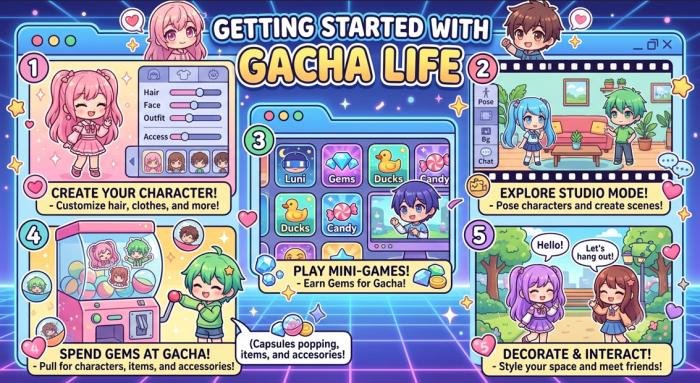
Starting can feel overwhelming because there are many menus and customization options. Fortunately, learning the basics only takes a few minutes.
Download and Install
The game is available for Android, iOS, and Windows, making it accessible across multiple platforms. After installation, you’ll be introduced to the main interface where all creative tools are easy to access.
Understanding the Main Menu
The home screen includes several important sections:
- Character customization
- Studio Mode
- Life Mode
- Mini Games
- Settings
- Gifts and rewards
Create Your First Character
Character creation is where the fun begins.Start by selecting:
- Hair style
- Hair color
- Eyes
- Face shape
- Clothing
- Shoes
- Accessories
Choose a Theme Before Customizing
One common mistake beginners make is randomly selecting clothes and accessories without a clear direction.Instead, decide on a concept first.Examples include:
- High school student
- Fantasy mage
- Knight
- Superhero
- Musician
- Detective
- Vampire
- Princess
- Scientist
- Modern fashion influencer
Best Character Customization Tips
Creating memorable characters involves more than selecting attractive clothing. Great designs tell viewers something about the character before they even speak.
Use a Limited Color Palette
Too many colors can make a character appear messy.A simple approach is:
- One primary color
- One secondary color
- One accent color
This creates a balanced appearance that’s visually appealing.
For example:
Primary: Navy Blue
Secondary: White
Accent: Gold
The result feels coordinated instead of overwhelming.
Match Hairstyles with Personality
Hair communicates personality surprisingly well.Consider these examples:
- Short hair often suggests confidence.
- Long flowing hair creates an elegant appearance.
- Messy hair can imply a carefree personality.
- Twin tails often give an energetic feeling.
- Curly styles appear playful.
- Straight hairstyles feel calm and organized.
Choose Expressions Carefully
Facial expressions dramatically affect storytelling.
A smiling character works well in cheerful scenes.
Serious expressions fit dramatic moments.
Surprised faces increase excitement.
Angry expressions help during conflicts.
Changing only the facial expression can completely alter the emotional impact of a scene.
Avoid Too Many Accessories
One mistake seen in many beginner characters is adding every available accessory.
Instead of using:
- Three hats
- Two glasses
- Four necklaces
- Multiple wings
- Extra props
Select only items that support the character’s identity.Simple designs often appear more professional than overloaded ones.
Create Original Characters Instead of Copies
It’s tempting to recreate popular anime heroes, but original characters are much more memorable.
Ask yourself:
- What motivates this character?
- What are their strengths?
- What weaknesses do they have?
- What hobbies do they enjoy?
- How do they react under pressure?
These questions help transform a basic design into a believable personality.
Think Beyond Appearance
Strong character design combines visual style with personality.Imagine two students wearing identical uniforms.One is confident, speaks loudly, and enjoys sports.
The other is shy, loves books, and avoids attention.Although they look similar, their personalities make them completely different.Giving every character a unique backstory, goals, and relationships makes future storytelling much easier.
Practical Example Designing an Original Character
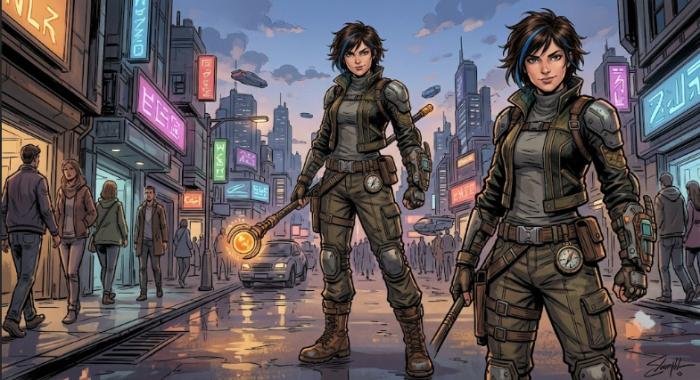
Suppose you’re creating a fantasy explorer.Instead of randomly choosing items, build the character step by step:
- Theme: Adventurer
- Main colors: Brown, green, and gold
- Hairstyle: Medium-length with a slightly messy look
- Outfit: Explorer jacket with sturdy boots
- Accessory: Small backpack and compass
- Expression: Curious smile
- Personality: Brave, optimistic, and always searching for hidden treasures
Notice how every design choice supports the same concept. This consistency makes the character feel believable and memorable.
Expert Tip Create a Character Profile
Many creators focus only on appearance, but experienced storytellers often maintain a simple profile for each original character.Include details such as:
- Full name
- Age
- Favorite color
- Hobbies
- Strengths
- Weaknesses
- Friends
- Goals
- Fears
- Personality traits
Creative Storytelling, Studio Mode, Outfit Ideas & Advanced Tips
Now that you’ve learned how to create appealing characters, it’s time to bring them to life. Great characters become memorable when they have meaningful goals, believable personalities, and interesting relationships. This section focuses on storytelling techniques, Studio Mode, outfit inspiration, and advanced creative strategies that can help you make the most of gacha life.
How to Create Better Stories: A compelling story doesn’t need complicated plots or dozens of characters. Even a simple idea can become engaging when it’s well organized.
Start with a Clear Story Idea: Before creating scenes, decide what your story is about.Ask yourself:
- Who is the main character?
- What problem do they face?
- Who helps or opposes them?
- What lesson will they learn?
- How will the story end?
Use the Classic Three-Act Structure: Many successful stories follow a simple framework.
Beginning: Introduce your main characters, setting, and the central conflict.
Middle
Increase the challenge by adding obstacles, misunderstandings, or unexpected events.
Ending: Resolve the conflict in a satisfying way and show how the characters have changed.
This structure works well for short scenes, comics, and longer story series.
Give Every Character a Purpose: Avoid adding characters simply to fill the screen.Each character should contribute by:
- Solving a problem
- Creating conflict
- Providing emotional support
- Offering humor
- Revealing important information
Purposeful characters make every scene feel meaningful.
Write Natural Dialogue: Dialogue should sound like a real conversation instead of long speeches.For example:
Instead of:
I have always dreamed of becoming the greatest hero because when I was a child I saw many amazing people helping others.
Try:
I’ve wanted to become a hero since I was a kid. Watching others help people inspired me.”
Shorter dialogue feels more realistic and easier to follow.
Balance Action and Emotion: Stories become memorable when exciting moments are combined with emotional scenes.Alternate between:
- Action
- Humor
- Friendship
- Suspense
- Quiet conversations
- Emotional turning points
Making the Most of Studio Mode
Studio Mode is one of the strongest features in gacha life because it allows players to transform static characters into visual stories.
Choose Backgrounds That Support the Scene
The background should match the mood.Examples include:
- Classroom for school stories
- Forest for fantasy adventures
- City streets for modern settings
- Castle interiors for medieval tales
- Parks for relaxing conversations
Position Characters Naturally
Avoid lining every character up in a perfectly straight row.Instead:
- Face characters toward each other during conversations.
- Leave space between groups.
- Place important characters closer to the center.
- Use different heights and positions for variety.
Use Props to Tell the Story
Props add context without requiring extra dialogue.For example:
A backpack suggests a student.
A microphone hints at a singer.
A sword indicates an adventurer.
A laptop can identify a programmer.
Choose props that reinforce the character’s role instead of cluttering the scene.
Create Visual Focus
Viewers should immediately know where to look.You can achieve this by:
- Placing the main character in the foreground.
- Limiting unnecessary background objects.
- Using expressive poses.
- Keeping supporting characters slightly less detailed.
Creative Outfit Ideas
Fashion plays a major role in character identity. Instead of changing clothes randomly, think about what each outfit says about the character.
Casual Everyday Style
Perfect for slice-of-life stories.Ideas include:
- Hoodies
- Sneakers
- Jeans
- T-shirts
- Light jackets
These outfits make characters feel relatable.
School Uniform Themes
Ideal for classroom stories.Consider adding:
- Books
- School bags
- Glasses
- Sports accessories
- Club badges
Fantasy Adventures
Fantasy characters can include:
- Cloaks
- Armor
- Magic staffs
- Crowns
- Capes
- Boots
Modern Fashion
Experiment with:
- Streetwear
- Elegant formal outfits
- Business clothing
- Summer fashion
- Winter jackets
Mixing styles can produce original designs without copying existing characters.
Seasonal Outfits
Refreshing your characters for different seasons adds realism.Examples include:
Spring: Light colors and floral accessories.
Summer: Short sleeves, sunglasses, and sandals.
Autumn: Sweaters, scarves, and earthy tones.
Winter: Coats, boots, gloves, and warm hats.
Changing outfits based on the season helps your stories feel more immersive.
Common Mistakes to Avoid
Even experienced creators occasionally fall into bad habits. Recognizing these mistakes early will improve your work.
Overusing Bright Colors: Using too many vibrant colors can overwhelm the viewer.
Choose one dominant color and let smaller accent colors provide contrast.
Making Every Character Look Similar: If everyone has the same hairstyle, eye shape, and clothing style, readers may struggle to remember who is who.
Vary:
- Hairstyles
- Color palettes
- Clothing styles
- Expressions
- Accessories
Ignoring Character Development
Characters should grow throughout the story.
Perhaps a shy student becomes more confident.
Maybe a selfish hero learns teamwork.
Development keeps readers emotionally invested.
Rushing Important Scenes
Big emotional moments deserve time.
Allow conversations, reactions, and consequences to unfold naturally instead of resolving everything immediately.
Copying Popular Characters
Drawing inspiration from anime is perfectly acceptable, but direct copies rarely stand out.
Adding your own personalities, histories, and goals creates more memorable original characters.
Advanced Creative Tips
Once you’re comfortable with the basics, you can elevate your projects with techniques used by experienced creators.
Create Character Relationships
Interesting relationships make stories feel alive.Consider different dynamics:
- Best friends
- Friendly rivals
- Siblings
- Mentor and student
- Parent and child
- Hero and villain
Build a Consistent World
If your story spans multiple episodes, keep important details consistent.
Track:
- Locations
- Character ages
- Friendships
- Rules of your fictional world
- Important events
Consistency strengthens credibility and prevents plot holes.
Use Symbolism
Small visual details can communicate deeper meaning.Examples:
A broken necklace may represent loss.
A flower can symbolize hope.
Dark clothing might reflect grief.
Bright colors often suggest optimism.
These details enrich storytelling without lengthy explanations.
Plan Before You Create
Professional creators rarely improvise everything.A simple outline can include:
- Episode title
- Main objective
- Important dialogue
- Scene order
- Ending
Expert Recommendations
Many online guides explain game features but rarely discuss creative habits that improve long-term results.Consider adopting these practices:
- Save multiple versions of important characters before making major changes.
- Organize original characters into categories such as heroes, villains, classmates, or family members.
- Keep a notebook or digital document filled with story ideas and dialogue.
- Observe movies, books, and television shows to understand pacing and character development.
- Ask friends or community members for constructive feedback before publishing longer story series.
Improving creativity is an ongoing process. Every project teaches something new, whether it’s designing better outfits, writing stronger dialogue, or building more believable characters.
The most successful creators don’t aim for perfection on their first attempt. Instead, they continue experimenting, refining their ideas, and learning from each new story they create. With patience and consistent practice, your scenes will become more polished, your characters more memorable, and your storytelling more engaging.
Gacha Life vs. Gacha Club
Many players eventually wonder whether they should continue with Gacha Life or switch to Gacha Club. While both games are developed by Lunime and share a similar anime-inspired style, they offer different experiences. Your choice depends on whether you value simplicity or advanced customization.
Professional Comparison Table
| Feature | Gacha Life | Gacha Club |
| Best For | Beginners and casual players | Advanced creators and experienced players |
| Character Slots | Limited | More character slots |
| Character Customization | Extensive | More detailed and flexible |
| Studio Mode | Excellent for storytelling | Enhanced with additional features |
| Battle System | No | Yes |
| Mini Games | Available | Available |
| Learning Curve | Easy | Moderate |
| Offline Play | Yes (most features) | Yes (most features) |
| Ideal Use | Character creation and roleplay | Advanced character design and battle gameplay |
If you’re just beginning your creative journey, Gacha Life is often the better starting point because its interface is simple and easy to understand. Once you’re comfortable designing characters and building stories, Gacha Club offers additional tools and customization options for more complex projects.
How to Keep Improving Your Creativity
Creativity grows through consistent practice rather than trying to create a perfect character on the first attempt. Many experienced creators revisit older projects and improve them over time, using each new design as a learning opportunity.
Here are a few habits that can help you grow:
- Create one new original character every week.
- Experiment with different genres, such as fantasy, mystery, romance, or science fiction.
- Observe color combinations in anime, comics, and animated films for inspiration.
- Save older versions of your characters so you can compare your progress.
- Write short stories before creating scenes to make your narratives more organized.
- Ask trusted friends or fellow creators for constructive feedback.
- Practice using different poses and facial expressions to make conversations feel more natural.
Remember, improvement comes from experimenting with new ideas rather than copying popular designs.
Unique Tips That Many Guides Miss
Most beginner articles explain how to customize characters, but they rarely discuss the creative process behind memorable storytelling. These additional tips can help your projects stand out:
Create a Character Library: Instead of making new characters every time you start a story, build a personal library of original characters. Organize them into categories such as heroes, villains, classmates, teachers, family members, or fantasy creatures. This saves time and helps you create consistent story worlds.
Use Personality Before Appearance: A common mistake is designing a character’s outfit before deciding who they are. Try reversing the process. First, define their personality, goals, fears, and hobbies. Then choose hairstyles, clothing, and accessories that reflect those traits.
Keep a Story Journal: Great ideas often appear unexpectedly. Keep a notebook or digital document where you record story concepts, dialogue ideas, interesting locations, and character relationships. Over time, you’ll build a valuable collection of inspiration for future projects.
Learn Basic Color Psychology: Colors influence how viewers perceive characters.
- Blue often represents trust and calmness.
- Red can symbolize courage, passion, or danger.
- Green suggests nature, balance, or growth.
- Purple is commonly associated with mystery or magic.
- Black may communicate elegance, power, or secrecy.
- White often represents innocence or hope.
Using colors intentionally makes characters more expressive without needing additional dialogue.
Focus on Small Details: Tiny details can make a big difference. Matching accessories, consistent hairstyles, realistic reactions, and thoughtful backgrounds help scenes feel polished and believable. Rather than adding more elements, focus on improving the quality of each one.
Final Thoughts
Whether you’re designing your very first character or refining a long-running story series, Gacha Life offers endless opportunities to express your creativity. Its intuitive character editor, flexible Studio Mode, and beginner-friendly gameplay make it an excellent platform for experimenting with character design and visual storytelling.
The most successful creators don’t rely on complicated tools—they focus on strong ideas, consistent practice, and attention to detail. Start with simple characters, develop meaningful personalities, and gradually expand your stories as your skills improve. Over time, you’ll build a collection of original creations that reflect your own imagination and creative style.
Instead of chasing perfection, enjoy the creative process. Every new character, scene, and story is a chance to learn something new. With patience, practice, and a willingness to experiment, you can create engaging projects that are both enjoyable to make and rewarding to share with others.
FAQs
Q1: Is Gacha Life free to play?
Ans: Yes. Gacha Life is free to download and play on supported Android, iOS, and Windows devices. While optional in-app purchases may exist on some platforms, the core gameplay and character creation features are available without purchasing anything.
Q2: Can I play Gacha Life without an internet connection?
Ans: Yes. Most features can be enjoyed offline after the game has been installed. Internet access is generally only needed for downloading the game, updates, or accessing certain online content, depending on your platform.
Q3: Is Gacha Life suitable for children?
Ans: The game itself is designed to be family-friendly. However, if children share content online or interact with community-created media, parents should supervise internet use and discuss safe online behavior.
Q4: What is Studio Mode used for?
Ans: Studio Mode allows players to place characters into customized scenes, choose backgrounds, add props, adjust poses, and create visual stories or comics without needing advanced editing software.
Q5: How do I make better original characters?
Ans: Start by giving each character a unique personality, clear goals, strengths, and weaknesses. Then choose hairstyles, outfits, colors, and accessories that match those traits instead of selecting items randomly.
Q6: Which is better: Gacha Life or Gacha Club?
Ans: Both games have strengths. Gacha Life is easier for beginners and focuses on creativity and storytelling, while Gacha Club provides more customization options and includes battle features for players who want additional gameplay.
Q7: What are the best ways to improve my stories?
Ans: Plan your plot before creating scenes, develop believable characters, write natural dialogue, use emotional moments effectively, and keep your story consistent from beginning to end. Revising your work after completing a draft can also make a noticeable difference.
Q8: Can I create completely original characters?
Ans: Absolutely. In fact, creating original characters is one of the most rewarding parts of the game. Combining unique personalities, thoughtful backstories, and distinctive visual designs will make your creations more memorable than simply recreating existing anime characters.