
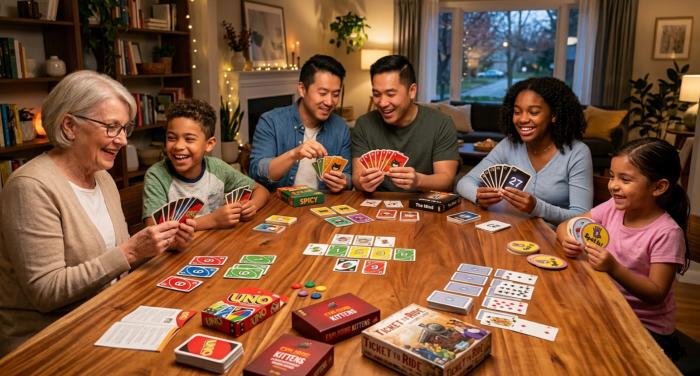
52 Best Card Games You Should Try in 2026 Fun for All Ages
Card games have been a timeless source of entertainment, bringing people together for generations. From traditional decks played around the table to modern digital formats available on smartphones, card’s games have continuously evolved while keeping their core appeal intact.
In 2026, card games are more popular than ever. Their simplicity, affordability, and versatility make them a go-to choice for all kinds of players. Whether you’re looking for a quick game with friends, a relaxing solo challenge, or a competitive online experience, card’s games offer something for every mood and occasion.
52 of the best card games to try in 2026. From classic favorites and beginner-friendly options to strategy-heavy and party games, this list is designed to help you find the perfect card game no matter your skill level or setting.
Read More: Carcassonne Game: Complete Guide to Rules, Strategy & How to Play for Beginners
How We Chose These Card Games
With so many card’s games available today, creating a list of the 52 best card games requires more than just picking popular names. The goal of this guide is to recommend card’s games that are not only well-known but also genuinely enjoyable, accessible, and suitable for different types of players.
Fun and Replay Value
The most important factor was how fun each game is to play. The best card games are the ones people come back to again and again. We included games that offer excitement, interaction, and a high replay value so they never feel boring.
Popularity and Player Appeal
We considered both globally popular card’s games and rising favorites. Some games have stood the test of time, while others have gained attention in recent years. This mix ensures that the list feels both familiar and fresh.
Skill Level and Learning Curve
Not everyone plays card games at the same level. That’s why this list includes:
- Easy games for beginners
- Medium-level games for casual players
- Strategy-heavy games for experienced players
Number of Players
Different situations call for different types of card’s games. We included options for:
- Solo play
- Two players
- Small groups
- Large parties
This makes it easier to choose the right game for any occasion.
Variety of Game Types
Card’s games come in many forms, and we wanted to reflect that diversity. This list includes:
- Classic card games
- Family-friendly games
- Competitive strategy games
- Party and social games
- Online and digital card games
By combining all these categories, we’ve created a well-rounded collection of card games that suits every preference.
Classic Card Games Timeless Favorites
These classic card games have stood the test of time. Long before mobile apps and online platforms, people gathered around tables to enjoy simple decks of cards—and many of those same games are still played today.
What makes classic card games so special is their balance of simplicity and depth. Most of them are easy to learn, yet offer enough strategy to stay interesting even after years of play. They also require minimal equipment—usually just a standard deck—making them accessible anywhere, anytime. Below are some of the most popular and enduring card games you should try:
Poker
- Players: 2–10
- Difficulty: Medium
- Why it’s fun: A mix of strategy, psychology, and luck
- Quick description: Poker is one of the most famous card games in the world, where players bet based on the strength of their hands and try to outplay their opponents.
Rummy
- Players: 2–6
- Difficulty: Easy–Medium
- Why it’s fun: Simple rules with satisfying combinations
- Quick description: In Rummy, players aim to form sets or sequences of cards. It’s easy to learn and widely played across different cultures.
Bridge
- Players: 4
- Difficulty: Hard
- Why it’s fun: Deep strategy and teamwork
- Quick description: Bridge is a trick-taking card game played in partnerships. It requires communication, planning, and strong memory skills.
Solitaire
- Players: 1
- Difficulty: Easy
- Why it’s fun: Relaxing and mentally engaging
- Quick description: A classic solo card game where the goal is to organize cards in a specific order. Perfect for quiet, focused play.
Gin Rummy
- Players: 2
- Difficulty: Medium
- Why it’s fun: Fast-paced and skill-based
- Quick description: A variation of Rummy designed for two players, focusing on forming combinations quickly.
Crazy Eights
- Players: 2–5
- Difficulty: Easy
- Why it’s fun: Quick and unpredictable gameplay
- Quick description: Players match cards by suit or number, with special cards that change the flow of the game.
Go Fish
- Players: 2–6
- Difficulty: Easy
- Why it’s fun: Perfect for beginners and kids
- Quick description: Players ask each other for specific cards to form matching sets, making it simple and interactive.
War
- Players: 2
- Difficulty: Very Easy
- Why it’s fun: Pure luck and fast rounds
- Quick description: Each player flips a card, and the higher card wins. It’s one of the simplest card games ever created.
Old Maid
- Players: 2–6
- Difficulty: Easy
- Why it’s fun: Lighthearted and fun for all ages
- Quick description: Players try to form pairs and avoid being left with the “Old Maid” card.
Euchre
- Players: 4
- Difficulty: Medium
- Why it’s fun: Quick rounds and teamwork
- Quick description: A trick-taking game popular in certain regions, known for its fast pace and strategic play.
Canasta
- Players: 2–6
- Difficulty: Medium
- Why it’s fun: Combination-building strategy
- Quick description: A Rummy-style game focused on forming large sets of cards, often played in teams.
Pinochle
- Players: 2–4
- Difficulty: Medium–Hard
- Why it’s fun: Unique scoring system and strategy
- Quick description: A trick-taking game that uses a special deck and involves forming combinations for points.
Cribbage
- Players: 2–4
- Difficulty: Medium
- Why it’s fun: Combines cards with a scoring board
- Quick description: Players score points by forming combinations, using a distinctive pegboard to keep track.
These classic card games continue to be loved because they are easy to access, socially engaging, and endlessly replayable. Whether you’re learning for the first time or revisiting old favorites, these timeless card games are a great place to start.
Best Card Games for Family Game Night
Family game night is all about connection, laughter, and simple fun—and the right card games can make all the difference. The best family-friendly card games are easy to learn, quick to play, and suitable for a mix of ages. They encourage interaction, keep everyone involved, and avoid overly complex rules that slow things down.
Whether you’re playing with kids, teens, or adults, these card games are perfect for creating memorable moments together:
Uno
- Players: 2–10
- Difficulty: Easy
- Why it’s fun: Fast-paced with exciting action cards
- Quick description: Players match cards by color or number while using special cards to skip turns, reverse play, or make others draw cards.
Go Fish
- Players: 2–6
- Difficulty: Easy
- Why it’s fun: Simple and interactive for younger players
- Quick description: Players ask each other for specific cards to form sets, making it a great learning game for kids.
Crazy Eights
- Players: 2–5
- Difficulty: Easy
- Why it’s fun: Quick rounds and easy rules
- Quick description: Players match cards by suit or number, with “8s” acting as wild cards to change the game.
Old Maid
- Players: 2–6
- Difficulty: Easy
- Why it’s fun: Lighthearted and suspenseful
- Quick description: Players try to make pairs while avoiding being left with the odd “Old Maid” card.
Skip-Bo
- Players: 2–6
- Difficulty: Easy–Medium
- Why it’s fun: Combines luck with simple strategy
- Quick description: Players use sequencing and timing to play all the cards in their stockpile before others.
Phase 10
- Players: 2–6
- Difficulty: Medium
- Why it’s fun: Progression-based gameplay keeps things interesting
- Quick description: Players complete different “phases” (like sets or runs) in order, making each round feel new.
War
- Players: 2
- Difficulty: Very Easy
- Why it’s fun: No strategy needed—pure chance
- Quick description: Each player flips a card, and the higher one wins. Simple and exciting for younger kids.
Slapjack
- Players: 2–6
- Difficulty: Easy
- Why it’s fun: Fast reactions and lots of laughter
- Quick description: Players race to slap the jack when it appears, adding a physical and energetic twist.
Memory (Concentration)
- Players: 2–4
- Difficulty: Easy
- Why it’s fun: Improves memory skills for all ages
- Quick description: Cards are placed face down, and players take turns flipping them to find matching pairs.
Apples to Apples
- Players: 4–10
- Difficulty: Easy
- Why it’s fun: Creative and often hilarious
- Quick description: Players match cards based on a chosen theme, leading to funny and unexpected combinations.
Why These Card Games Work for Families
Not every game fits a family setting—but the card games in this list are especially well-suited for bringing people together. They strike the right balance between simplicity, fun, and interaction, making them ideal for players of different ages and experience levels.
Here’s why these card games work so well for family game night:
Easy to Learn for All Ages
Family-friendly card games usually have simple rules that can be explained in just a few minutes. This means younger players can join in without feeling overwhelmed, while adults can jump straight into the fun without long instructions.
Encourages Laughter and Interaction
The best family card games create moments of surprise, competition, and humor. Whether it’s a sudden win, a funny card combination, or a playful reaction, these games naturally spark conversation and laughter.
Balanced for Mixed Skill Levels
In many families, players have different levels of experience. These card games often include a mix of luck and strategy, so everyone has a fair chance to win—not just the most experienced player.
Quick and Flexible Gameplay
Family schedules can be busy, so it helps when games don’t take too long. Most of these card games can be played in short rounds, making them perfect for quick sessions or multiple back-to-back games.
Minimal Setup and Easy to Carry
One of the biggest advantages of card games is their portability. A single deck or small card pack is all you need, making them perfect for playing at home, during travel, or even on holidays.
Strengthens Family Bonds
More than just entertainment, card games create shared experiences. Sitting together, playing, and enjoying each other’s company helps build stronger connections and lasting memories.
Online & Digital Card Games
In today’s world, card games are no longer limited to physical decks and tabletop play. With smartphones, computers, and gaming platforms, card games have successfully moved into the digital space. This shift has made them more accessible, interactive, and global than ever before.
Online and digital card games allow you to play anytime, anywhere—whether you’re competing with friends or matching up with players from around the world.
Why Digital Card Games Are So Popular
Digital versions of card games have grown massively in popularity because they offer:
- Instant access: No physical deck needed—just open an app or website
- Global competition: Play against real players worldwide
- Automatic rules: The game handles scoring and rules for you
- Regular updates: New features, decks, and modes are often added
- Cross-platform play: Many games work on mobile, PC, and tablets
Popular Online Card Games
- Players: 1v1
- Difficulty: Medium–Hard
- Why it’s fun: Deep strategy with fantasy-themed cards
- Quick description: A digital collectible card game where players build decks and battle using spells, creatures, and tactics.
UNO Online
- Players: 2–10
- Difficulty: Easy
- Why it’s fun: Classic gameplay with online multiplayer
- Quick description: The digital version of UNO lets you play with friends or random players anytime.
Solitaire (Digital Versions)
- Players: 1
- Difficulty: Easy
- Why it’s fun: Relaxing and perfect for quick breaks
- Quick description: The classic solo card game, now widely available on mobile apps and computers with smooth animations and daily challenges.
Poker Apps Texas Hold’em Online
- Players: 2–9+
- Difficulty: Medium–Hard
- Why it’s fun: Competitive and skill-based gameplay
- Quick description: Online poker platforms let you play real-time matches with players around the world.
Gwent
- Players: 1v1
- Difficulty: Medium
- Why it’s fun: Strategic and visually rich gameplay
- Quick description: A standalone digital card game originally inspired by The Witcher series, focused on tactical deck building.
Legends of Runeterra
- Players: 1v1
- Difficulty: Medium–Hard
- Why it’s fun: Balanced strategy and smooth gameplay mechanics
- Quick description: A competitive digital card game featuring characters from the League of Legends universe.
Magic: The Gathering Arena
- Players: 1v1
- Difficulty: Hard
- Why it’s fun: One of the deepest strategy card games ever made
- Quick description: The digital version of the famous trading card game with complex mechanics and competitive play.
The Future of Card Games is Digital
The rise of online platforms has completely transformed how people experience card games. Players no longer need to gather physically—now, a simple internet connection is enough to enjoy fast-paced matches or long strategic battles.
Whether you prefer casual games like UNO or competitive titles like Hearthstone, digital card games offer something for every type of player.
Conclusion
Card games have remained one of the most enduring and enjoyable forms of entertainment for generations, and in 2026 their popularity is stronger than ever. From traditional classics played around a table to modern digital versions enjoyed on smartphones and PCs, card games continue to evolve while still keeping their original charm.
What makes card games truly special is their versatility. They can be simple enough for beginners, strategic enough for experienced players, and social enough to bring families and friends closer together. Whether you prefer fast-paced party games, thoughtful strategy challenges, or relaxing solo play, there is always a card game that fits your mood.
This list of 52 best card games is designed to help you explore new experiences, rediscover timeless favorites, and find the perfect game for any situation—whether it’s a casual evening, a family gathering, or an online competition.
FAQs
Q1. What are the most popular card games in 2026
Ans: Some of the most popular card games in 2026 include Poker, Uno, Rummy, Solitaire, and online games like Hearthstone and digital poker platforms. These games remain popular because they are easy to learn and highly entertaining.
Q2. Are card games good for the brain
Ans: Yes, many card games help improve memory, concentration, and strategic thinking. Games that require planning and decision-making can also boost problem-solving skills and mental agility.
Q3. What are the best card games for beginners
Ans: Beginners can start with simple card games like Go Fish, Crazy Eights, Uno, and War. These games have easy rules and are quick to learn, making them perfect for new players.
Q4. Can I play card games online
Ans: Absolutely. Many card games are now available online and on mobile apps. You can play against friends or compete with players worldwide in games like Poker, UNO Online, and Hearthstone.
Q5. What are the best card games for family game night
Ans: Family-friendly card games include Uno, Skip-Bo, Phase 10, Go Fish, and Crazy Eights. These games are fun, easy to understand, and suitable for all age groups.
Q6. Are card games only based on luck
Ans: No, not all card games are based on luck. While some games involve chance, many others—like Poker, Bridge, and Rummy—require strong strategy, skill, and decision-making.
Q7. Why are card games still popular today
Ans: Card games remain popular because they are affordable, portable, and highly versatile. They can be played anywhere—at home, during travel, or online—and they offer fun for all ages and skill levels.




One Comment