

Thestripesblog Frank Fisher: Blog Posts, Stories and Helpful Articles
Thestripesblog Frank Fisher is a keyword that may interest readers searching for blog posts, engaging stories, and helpful online articles. In today’s digital world, blogs provide a convenient way to access information, read different perspectives, and find answers to common questions.
Whether readers want to locate a particular website, check an author’s published work, or find useful information on a specific subject, knowing how to evaluate online content can make their search more productive. By focusing on relevant topics, clear writing, and reliable sources, readers can get more value from their online reading experience.
What Is Thestripesblog Frank Fisher?
Thestripesblog Frank Fisher is a search phrase that may help readers locate a website, an author profile, or articles associated with these names. However, the phrase itself does not establish the website’s ownership, its publishing history, or Frank Fisher’s exact relationship with the publication. Those details should be confirmed through reliable information from the relevant website and other trustworthy sources.
A blog is generally an online publication that presents articles, opinions, stories, tutorials, or other written material. Some blogs cover a single subject, while others publish content across several categories. Their purpose may be educational, informational, professional, personal, or entertainment-focused.
A website connected with an author’s name may provide an author biography, a collection of published articles, or information about the writer’s interests. To determine whether Frank Fisher writes for or contributes to Thestripesblog, readers can check the site’s About page, author bylines, and publication archive.
Read More: Chrono Trigger Review, Story, and Gameplay Guide
Why Are People Searching for Thestripesblog Frank Fisher?
People search online for different reasons, and a combination of a website name and an individual’s name often indicates a specific information need. A reader may have seen a reference to the blog, encountered an article, or received a link from another person.
Finding Published Articles
One possible reason for this search is to locate articles associated with a particular website or writer. Readers might remember part of an article title but not the complete address. Using the website name and the author’s name together can help narrow the search.
After reaching a relevant page, readers should examine the headline, publication date, author information, and subject matter. This makes it easier to determine whether the article matches the material they are looking for.
Checking Author Information
Another reason may be the desire to verify the identity of Frank Fisher. Readers often want to know who wrote an article, what subjects the writer covers, and whether the information comes from an identifiable source.
An author profile can help establish this connection when it contains a clear biography and links to published work. However, readers should not assume a person’s profession, qualifications, or background from a name alone.
Finding Useful Information
Some visitors are primarily interested in helpful articles. They may want practical suggestions, straightforward explanations, or guidance about an unfamiliar subject.
A useful article should answer the reader’s question, provide appropriate examples, and distinguish verified facts from opinions. The quality of each article should be judged on its own merits rather than assumed from the website name.
The Importance of Blog Posts, Stories and Helpful Articles
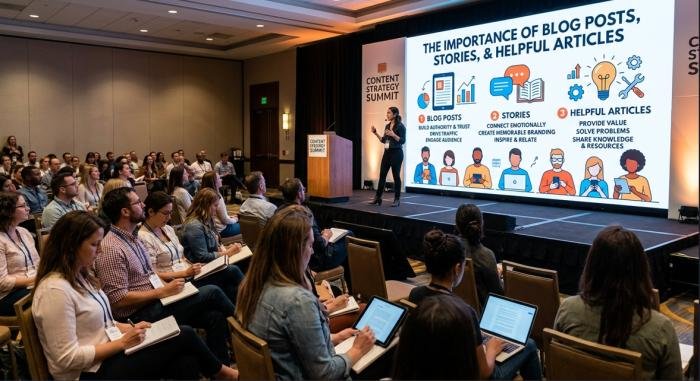
Blogs can offer several types of content, each serving a different purpose. Understanding these categories helps readers identify the material that best suits their needs.
Informative Blog Posts
Informative blog posts explain a subject in an organized and accessible format. They may introduce a concept, answer common questions, compare alternatives, or describe how a process works.
A good informative article usually includes a clear introduction, descriptive headings, relevant examples, and a conclusion that reinforces its main points. This structure helps readers follow the discussion without becoming overwhelmed.
For example, a post about online publishing might explain how blogs are organized, how author profiles work, and how readers can evaluate the reliability of an article. The information becomes more useful when the writer supports factual claims with trustworthy sources.
Engaging Stories
Stories communicate information through narratives. They may describe personal experiences, introduce a challenge, present an event, or share an idea through a sequence of connected details.
An engaging story does not need complicated language. A clear beginning, a meaningful development, and a satisfying conclusion can help readers understand the message.
When reading stories online, it is useful to distinguish between personal experiences, fictional writing, opinion pieces, and factual reporting. Clear labeling helps readers understand how the material should be interpreted.
Helpful Articles
Helpful articles are designed to solve a problem or answer a specific question. They may include instructions, checklists, comparisons, explanations, or recommendations.
For example, an article about checking online sources might explain how to review an author’s identity, confirm publication dates, compare claims with official references, and recognize unsupported statements.
Practical content works best when it gives readers clear next steps. It should be detailed enough to answer the question without adding unnecessary repetition.
How to Evaluate the Quality of a Blog
Not all online publications offer the same level of accuracy or usefulness. Evaluating a blog carefully helps readers decide whether its content deserves their attention.
Accuracy and Trustworthiness
Accuracy is one of the most important qualities of an informative article. Important claims should be supported by evidence, credible references, or clearly identified firsthand experience.
Readers can compare information with reliable publications, official websites, research papers, or recognized reference sources. For general background information, Wikipedia can be a useful starting point, but important facts should be checked against original or authoritative sources.
Publication dates also matter. Information about technology, current events, laws, and products can change over time. An older article may still be useful, but readers should verify whether its claims remain current.
Clear Writing and Readability
A quality blog should be easy to read. Descriptive headings, short paragraphs, relevant examples, and straightforward sentences make information more accessible.
Writers should ensure that every section contributes something meaningful. Repeating the same information simply to increase an article’s length can make the reading experience less enjoyable.
The structure should match the subject. A tutorial may benefit from numbered instructions, while a comparison article may use a table to summarize differences.
Original Content
Originality gives readers a reason to visit a publication instead of reading several pages that repeat identical information. A useful article may offer firsthand experience, a fresh explanation, a distinct perspective, or a careful summary of reliable research.
Writers should also acknowledge sources when using another person’s research, quotations, or ideas. Appropriate attribution supports transparency and allows readers to investigate the subject further.
What Makes an Article Helpful to Readers?
A helpful article begins with a clear purpose. It identifies a question and provides a meaningful answer rather than filling the page with unrelated information.
The following qualities can make an article more valuable:
- Clear purpose: Readers can understand what the article covers.
- Relevant information: The content stays focused on the topic.
- Practical examples: Readers can see how the information applies.
- Reliable references: Important claims can be checked.
- Readable structure: Headings and paragraphs guide the audience.
- Honest limitations: Unconfirmed information is not presented as fact.
- Useful next steps: Readers know where to find additional information.
These principles are relevant to every type of blog, whether it focuses on personal stories, educational material, entertainment, or general information.
For Thestripesblog Frank Fisher, readers should examine the actual published material to determine whether these qualities are present. The website’s name alone cannot establish its editorial standards or the accuracy of its content.
How to Verify Information About Frank Fisher

When a search includes a person’s name, verifying identity is especially important. Several individuals may share the same name, and online pages can sometimes confuse their professional or personal information.
Check the Official Website
Begin by identifying the relevant website and reviewing its About page, contact information, and editorial details. Confirm that the page you visit appears to be associated with the publication you intended to find.
Review Article Bylines
Article bylines indicate who is credited with writing a post. If multiple articles are attributed to Frank Fisher, an author archive may help readers review the person’s published work.
However, a byline should be considered alongside other available information when the author’s identity is important.
Compare Independent Sources
Independent sources can help verify information about an individual or publication. Depending on the claim, these sources might include professional profiles, recognized publications, official organizational pages, or other reliable records.
If the connection between Frank Fisher and Thestripesblog cannot be confirmed, it is better to acknowledge the uncertainty than to invent biographical details.
A Practical Guide to Reviewing Thestripesblog Frank Fisher
Readers can use a straightforward process to evaluate a website or article associated with this keyword.
| Review Step | What to Examine | Purpose |
| Website check | Official name and web address | Confirm the intended publication |
| Author check | Bylines and author profile | Identify the credited writer |
| Content review | Accuracy and relevance | Assess usefulness |
| Date check | Publication and update dates | Evaluate freshness |
| Source review | References and external links | Verify factual claims |
| Navigation check | Categories and related articles | Find relevant material |
| Safety check | Privacy policy and secure connection | Support safer browsing |
This checklist is a general guide, not a statement that all these features are present on Thestripesblog.
Step 1: Confirm the Website
Search for the complete phrase and compare the results. Pay attention to the domain name and avoid assuming that a page is official simply because its title contains the right words.
Step 2: Review Several Articles
Reading more than one article can provide a better understanding of a publication’s writing style and subject matter. Check whether the content is original, relevant, and supported by evidence where necessary.
Step 3: Verify Important Statements
Compare factual claims with trustworthy sources. This is particularly important for information about people, professional credentials, events, and technical subjects.
Step 4: Decide Whether the Content Meets Your Needs
The most useful source depends on your goal. A beginner may prefer a simple explanation, while a researcher may need original documents, technical references, or more extensive evidence.
FAQs
Q1. What is Thestripesblog Frank Fisher?
Ans: Thestripesblog Frank Fisher is a search phrase combining a blog-related name with an individual’s name. The exact relationship between the website and Frank Fisher should be verified through reliable website information and author records.
Q2. What type of content can readers expect from a blog?
Ans: Blogs may publish informative articles, personal stories, tutorials, opinions, entertainment posts, and practical guides. The actual topics available on a particular website should be confirmed by reviewing its published material.
Q3. How can I verify whether Frank Fisher writes for Thestripesblog?
Ans: Check the website’s author bylines, About page, author archive, and linked professional profiles. Compare relevant information with credible independent sources when necessary.
Q4. Why do people search for Thestripesblog Frank Fisher?
Ans: People may want to locate a website, find published articles, verify an author’s identity, or return to content they previously encountered. The reason depends on the individual searcher’s needs.
Q5. How can I determine whether a blog article is reliable?
Ans: Check the author’s identity, publication date, references, factual accuracy, and clarity. Compare important claims with reputable sources instead of relying entirely on one article.
Q6. Does using the focus keyword guarantee higher rankings?
Ans: No. A relevant keyword can help communicate a page’s subject, but search rankings depend on several factors, including relevance, content quality, competition, technical accessibility, and usefulness to readers.
Q7. Why are outbound links useful in blog articles?
Ans: Outbound links connect readers with additional references, official information, and background material. They should be relevant to the topic and support the article’s claims.






One Comment