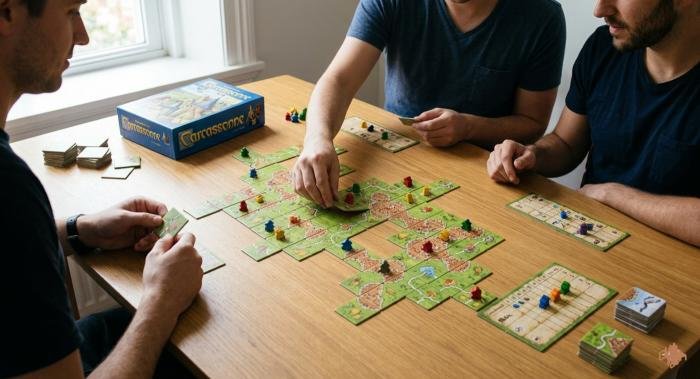
A Beginner’s Guide to the Main Types of Board Games
If you’ve ever stood in the board game aisle — or scrolled through an online store — feeling completely overwhelmed by the options, you’re not alone. With thousands of titles on the market, understanding the different types of board games is the fastest way to stop guessing and start choosing games you’ll actually enjoy.
This guide breaks down every major category of tabletop games, explains what makes each one unique, and gives you practical advice on picking the right game for your group, your schedule, and your experience level. Whether you’re buying your first game or building out a collection, knowing the types of board games available will save you time, money, and a few awkward game nights.
What Are the Different Types of Board Games?
At a basic level, board games are grouped by how they’re played rather than just their theme. The main types of board games include strategy games, party games, cooperative games, family games, abstract strategy games, deck-building and card-based games, miniature and war games, legacy games, and dice-based or roll-and-move games.
Each category has its own pace, learning curve, and ideal audience. Some games blend elements from more than one category — a strategy game might also have cooperative mechanics, for example — but understanding these core groups gives you a reliable framework for evaluating any new game you come across.
Read More: Boxing Random Unblocked: Play Online, Tips & Safe Access
Why Categories Matter More Than Genre
New players often shop by theme (pirates, space, fantasy) the same way they’d pick a movie. But theme tells you almost nothing about how a game plays. Two space-themed games can be completely different experiences — one might be a 20-minute party game, the other a four-hour strategic epic. That’s exactly why learning the real types of board games pays off before you buy, rather than choosing based on artwork or setting alone.
Strategy Board Games
Among all the types of board games, strategy games reward planning, resource management, and long-term thinking over luck. Players typically have meaningful choices at every turn, and outcomes are driven more by decision-making than by dice rolls or card draws.
What Makes a Game a “Strategy” Game
The defining feature is decision depth. In a strategy game, your choices early in the game affect your options later, which creates a sense of consequence that casual games don’t offer. Popular examples include Catan, Ticket to Ride, and Terraforming Mars.
Best Strategy Games for Beginners
If you’re new to this category, start with something with a shorter playtime and simple rules, like Ticket to Ride or Azul, before moving into heavier titles like Twilight Struggle or Brass: Birmingham. This gradual approach helps you build confidence without feeling lost in a 200-page rulebook.
Party Board Games
Party games prioritize fun, laughter, and social interaction over deep strategy. They’re designed for larger groups, shorter playtimes, and minimal setup — perfect for casual get-togethers.
Key Characteristics of Party Games
Low complexity, quick rounds, and high replayability are the hallmarks of this category. Games like Codenames, Just One, and Telestrations work well because anyone can learn them in under five minutes.
When Party Games Work Best
These games shine at larger gatherings, holiday parties, or any setting where not everyone is a “gamer.” Because the barrier to entry is so low, party games are often the best entry point for people who’ve never seriously explored the different types of board games before.
Cooperative Board Games
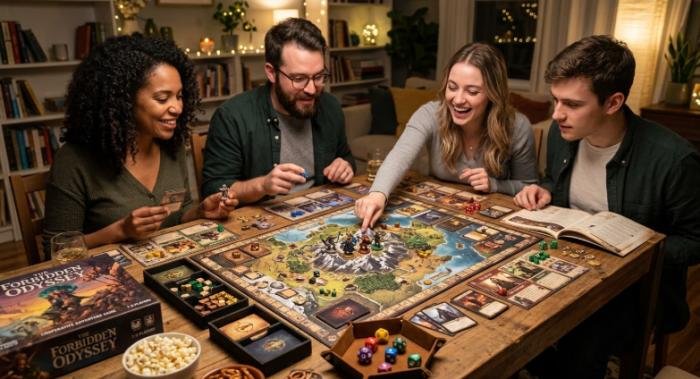
Cooperative — or “co-op” — games flip the traditional competitive format on its head. Instead of players competing against each other, everyone works together toward a shared goal, and the game itself acts as the opponent.
How Co-op Games Differ From Competitive Ones
In a game like Pandemic or Forbidden Island, the group either wins together or loses together. This creates a very different social dynamic — less rivalry, more teamwork and shared problem-solving.
Why They’re Great for Beginners and Families
Because there’s no direct competition, cooperative games tend to feel less intimidating for new players. Nobody has to worry about “losing” to a more experienced friend, which makes this one of the more welcoming types of board games for mixed-skill groups.
Family Board Games
Family games are built to accommodate a wide range of ages and skill levels in a single session. They balance simplicity with just enough strategy to stay interesting for adults.
What Age Ranges They Suit
Most family games are designed for players aged 6 and up, though some — like King of Tokyo — work well even with younger kids as long as an adult helps guide early turns.
Popular Examples
Sushi Go!, Sequence, and Qwirkle are excellent choices because they’re easy to teach in a few minutes but still offer light strategic choices that keep older players engaged.
Abstract Strategy Games
Abstract games strip away theme entirely, focusing purely on mechanics, logic, and strategic depth. Chess and Go are the most famous examples, but modern abstract games like Azul and Hive have brought fresh mechanics to this category.
Why They Appeal to Logical Thinkers
Without a theme to lean on, abstract games rely entirely on elegant rules and meaningful decisions. Players who enjoy puzzles or pattern recognition often gravitate toward this style once they’ve explored a few other types of board games and want something more cerebral.
Deck-Building and Card-Based Board Games
In deck-building games, players start with a small, weak set of cards and gradually build a more powerful deck as the game progresses. Dominion pioneered this genre, and it remains one of the most influential formats in modern tabletop design.
How These Differ From Traditional Board Games
Rather than moving pieces on a board, the “board” is often just a shared card market. The strategic decisions come from card selection and deck optimization rather than spatial movement, giving this category a very different feel from board-centric games.
Miniature and War Games
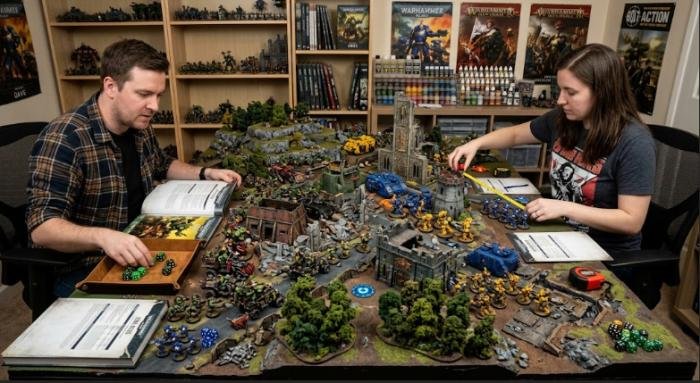
Miniature and war games involve detailed figures, often hand-painted, representing armies or units in tactical combat. Games like Warhammer 40,000 fall into this category.
What Sets Them Apart
These games typically demand longer playtimes, higher upfront costs, and a steeper learning curve than most other types of board games. They also often involve a hobby element — painting and assembling miniatures — that goes beyond simply playing the game itself.
Who Should Try Them
This category is best approached after you’ve got some experience with strategy games. If you enjoy detailed rule systems and don’t mind a significant time investment, miniature war games can be deeply rewarding.
Legacy and Campaign Board Games
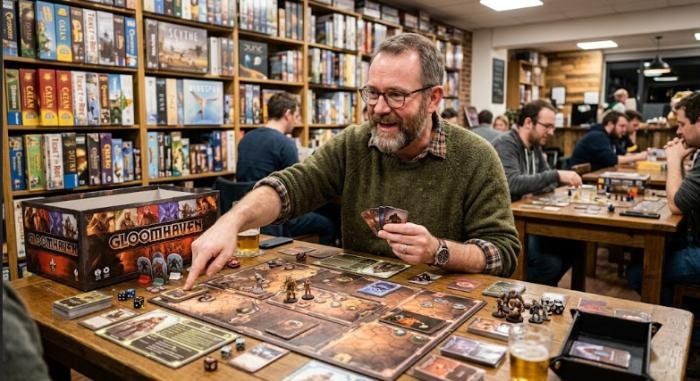
Legacy games evolve permanently over multiple sessions — you might tear up cards, write on the board, or unlock new rules as you progress. Pandemic Legacy and Gloomhaven are well-known examples.
Why Beginners Should Approach These Carefully
Because the changes are permanent, legacy games require a committed group willing to play through an entire campaign, sometimes 10–15 sessions long. This makes them a bigger commitment compared to other types of board games, so they’re best saved for a group that already enjoys playing together regularly.
Roll-and-Move and Dice-Based Games
These are among the simplest and most nostalgic types of board games — think Monopoly, Trouble, or Sorry!. Movement and outcomes are largely determined by dice rolls, with limited strategic decision-making.
Simplicity as a Feature, Not a Limitation
While hardcore hobbyists sometimes dismiss dice-heavy games, they remain popular for good reason: they’re easy to learn, require no strategic experience, and work well for young children or very casual game nights.
How to Choose the Right Type of Board Game
With so many types of board games to choose from, narrowing down your options comes down to three practical factors.
Consider Your Group Size
Party games and cooperative games generally scale well for larger groups, while many strategy games are tightly balanced for 2–4 players.
Consider Time and Complexity Tolerance
If your group has 30 minutes and low patience for rules, avoid heavy strategy or legacy games. Save those for a dedicated game night.
Consider Replayability
Some games (like deck-builders and strategy games) offer near-infinite replay value, while others (like most party games) are best enjoyed occasionally rather than every week. Here’s a quick comparison to help you decide:
| Game Type | Best For | Avg. Playtime | Complexity |
| Strategy | 2–4 experienced players | 45–120 min | Medium–High |
| Party | Large, mixed groups | 15–30 min | Low |
| Cooperative | Families, mixed skill levels | 30–60 min | Low–Medium |
| Family | All ages | 20–45 min | Low |
| Abstract Strategy | Puzzle lovers | 15–45 min | Medium |
| Deck-Building | Strategy fans | 30–60 min | Medium |
| Miniature/War | Committed hobbyists | 60–180+ min | High |
| Legacy/Campaign | Regular playgroups | 60–90 min per session | Medium–High |
| Dice-Based | Kids, casual play | 20–45 min | Low |
Common Mistakes Beginners Make When Picking Board Games
One frequent mistake is buying a game based on box art or theme alone, without checking the actual complexity level. Another is jumping straight into a heavy strategy or legacy game before the group has built confidence with lighter titles. Finally, many new collectors underestimate how much playtime and group size affect whether a game will actually get played — a brilliant 3-hour strategy game is useless if your group only has 45 minutes together each week.
Final Thoughts
There’s no single “best” category among the many types of board games available today — the right choice depends entirely on your group, your available time, and how much strategic depth you’re looking for. Start with lighter, more accessible options like party or family games, then branch out into strategy, cooperative, or legacy games as your group’s confidence and interest grow. The beauty of this hobby is that there’s a fit for almost every kind of player.
FAQs about types of board games
Q1: What is the most popular type of board game?
Ans: Strategy games and family games tend to be the most widely played categories, largely because titles like Catan and Ticket to Ride strike a balance between accessibility and depth that appeals to a broad audience.
Q2: What type of board game is best for beginners?
Ans: Family games and party games are usually the easiest starting point, since they have simple rules, short playtimes, and low pressure, making them ideal before moving on to more complex strategy titles.
Q3: How many types of board games are there?
Ans: While there’s no official fixed number, most hobbyists recognize around eight to nine major categories, including strategy, party, cooperative, family, abstract, deck-building, miniature/war, legacy, and dice-based games.
Q4: What’s the difference between a party game and a family game?
Ans: Party games are built for larger groups and prioritize social interaction and laughter, while family games are designed to engage a mix of ages with slightly more strategic depth in a smaller group setting.
Q5: Are strategy games hard to learn?
Ans: Not necessarily — many strategy games, like Ticket to Ride or Azul, have simple rules that are easy to pick up, while heavier titles like Brass: Birmingham require more time and experience to master.
Q6: Can one game belong to more than one category?
Ans: Yes, many modern games blend mechanics from multiple categories, such as a cooperative game with deck-building elements, so it’s common to see overlap between the main types of board games.
Q7: What’s a good first board game to buy?
Ans: For most beginners, a light strategy or family game like Ticket to Ride, Sushi Go!, or Azul offers an approachable introduction without overwhelming new players with rules.
Q8: Do board game types affect how long a game takes to play?
Ans: Absolutely — party and dice-based games typically wrap up in 15 to 30 minutes, while strategy, legacy, and miniature war games can run anywhere from an hour to several hours per session.